
IVF with Your Own Eggs After 40: When Is It Possible and What Factors Matter Most?

2026-09-14T08:26:17+00:00September 14th, 2026|Categories: News|Tags: , , , , , , , |

For many women considering IVF in their 40s, one question comes before almost everything else: Can I still try with my own eggs? The answer is highly individual. IVF with your own eggs after 40 can result in pregnancy and live birth, but reproductive potential changes substantially throughout the 40s. A woman at 40 with
Early Menopause and Fertility: Is Ovarian Function Ever Possible to Restore?

2026-09-14T08:20:29+00:00September 14th, 2026|Categories: News|Tags: , , , , , , , |

Being told that your ovarian reserve is very low—or that you may be approaching menopause earlier than expected—can make pregnancy seem impossible. But early menopause and fertility are more complex than a simple “fertile or infertile” diagnosis. Ovarian function declines along a continuum. Some women experience diminished ovarian reserve while still menstruating regularly. Others enter

Stem Cell Therapy for Female Fertility, Ovarian Aging & Menopause

2026-09-14T08:15:17+00:00September 14th, 2026|Categories: News|Tags: , , , , , , , |

Female fertility does not decline suddenly at menopause. It changes progressively as the ovaries age, often beginning years before menstrual cycles stop. During this transition, women may experience reduced ovarian reserve, poorer response to IVF stimulation, irregular cycles and eventually perimenopause, followed by menopause and postmenopause. For women who still wish to conceive—particularly those experiencing

Exosome Therapy for Female Fertility: How Regenerative Cell Signaling May Support Ovarian and Endometrial Health

2026-09-14T08:05:11+00:00September 14th, 2026|Categories: News|Tags: , , , , , , , |

Exosome therapy for female fertility represents one of the most rapidly developing areas of regenerative reproductive medicine. Unlike conventional fertility treatments that primarily act through hormones, medications or laboratory-assisted reproduction, exosome-based approaches focus on something more fundamental: communication between cells. Every tissue in the reproductive system depends on continuous molecular communication. Ovarian cells communicate with

IVF Failure: 10 possible reasons an IVF cycle may not work and what to investigate next

2026-09-10T11:38:25+00:00September 10th, 2026|Categories: News|Tags: , , , , , , , , , , , , , , , |

IVF failure can be one of the most emotionally difficult experiences during fertility treatment. After weeks of medication, monitoring, egg retrieval, fertilization, embryo development and embryo transfer, receiving a negative pregnancy test can leave patients searching for an explanation.One of the first questions is usually:“Why did my IVF fail?”Unfortunately, there is rarely one simple answer.

PRP vs Exosomes vs Stem Cells for Ovarian Rejuvenation: What is the difference?

2026-09-10T11:38:54+00:00September 10th, 2026|Categories: News|Tags: , , , , , , , , , , , |

Regenerative medicine is attracting increasing attention in fertility care, particularly among women with diminished ovarian reserve, low AMH, poor ovarian response or age-related decline in ovarian function. Three approaches frequently discussed are Platelet-Rich Plasma (PRP), exosome therapy and stem cell therapy. Although all three are associated with regenerative medicine, they are not the same treatment.

Diminished Ovarian Reserve: Causes, Symptoms, AMH Levels and Fertility Options

2026-09-10T10:58:15+00:00September 10th, 2026|Categories: News|Tags: , , , , , , , , , , , , , |

Being told that you have diminished ovarian reserve (DOR) can raise many questions. Does it mean that you are running out of eggs? Can you still become pregnant naturally? Does low ovarian reserve mean poor egg quality? Can IVF work with diminished ovarian reserve? And is there anything you can do to improve your fertility?

IVF After 40: Success Factors, Egg Quality and Treatment Options

2026-09-10T10:41:30+00:00September 10th, 2026|Categories: News|Tags: , , , , , , , , , , , |

More women than ever are considering pregnancy in their 40s. For some, this is the first time they have tried to conceive. Others may already have experienced unsuccessful attempts at natural conception or previous IVF cycles. One of the first questions is usually: “Can IVF work after 40?” The answer is yes—IVF after 40 can

How to improve egg quality: what science says about fertility after 35 and 40

2026-09-10T11:39:41+00:00September 10th, 2026|Categories: News|Tags: , , , , , , , |

For many women trying to conceive after the age of 35 or 40, one question quickly becomes central: Can I improve my egg quality? It is an understandable question. Female fertility gradually declines with age, and this decline becomes more pronounced during the mid-to-late 30s and 40s. However, fertility is complex, and age is only

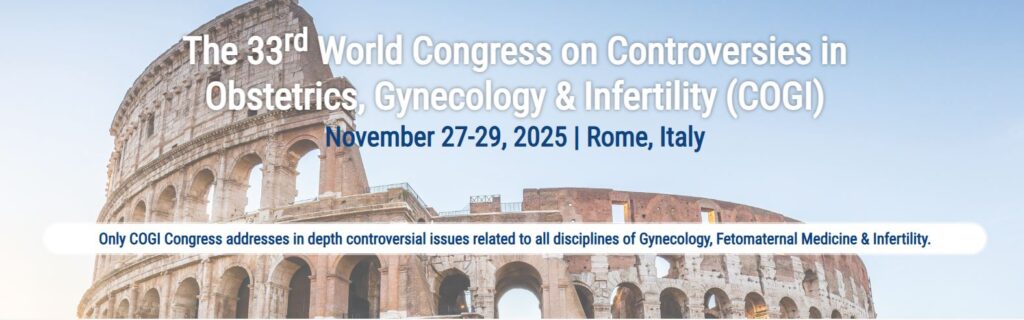
33rd COGI Congress – Participation of Dr Fraidakis

2025-12-03T12:39:48+00:00December 3rd, 2025|Categories: News|Tags: , , , , , , , |

Dr. Mattheos Fraidakis, the scientific director both of Chania Fertility Unit and Crete Fertility Centre, attended the the 33rd COGI World Congress in Rome, Italy. At the 33rd COGI World Congress (Controversies in Obstetrics, Gynecology, and Infertility) the topic of "PRP for rejuvenation aimed at improving ovarian response" was successfully discussed. Dr. Matthaios Fraidakis's

    Your Name (required)

    Your Email (required)

    Phone

    Country

    Your Message

    Go to Top